

In Japan, dreaming about an eggplant can be a promising way to begin the year.
Not just any dream, mind you. It needs to be your first dream of the year, and an eggplant is traditionally outranked by a hawk and Mount Fuji.
This unusual ranking belongs to a Japanese custom called hatsuyume, meaning the first dream of the year. Seeing any of these three things in your dream was considered a sign of good fortune for the months ahead. Exactly which night counts as the first is less clear. Some accounts point to 31 December, others to 1 January.
Why these particular objects? There are several explanations. One connects them to Tokugawa Ieyasu, the powerful ruler who established Japan’s Tokugawa shogunate in 1603. Ieyasu later retired to Suruga province, in what is now Shizuoka. According to one explanation, Mount Fuji, nearby Mount Ashitaka and the region’s prized eggplants represented three celebrated features of Suruga. Another explanation involves wordplay, including the similarity between nasu, meaning eggplant, and a verb meaning to accomplish something.
Whatever the origin, people even tried to improve their chances of having a fortunate dream.
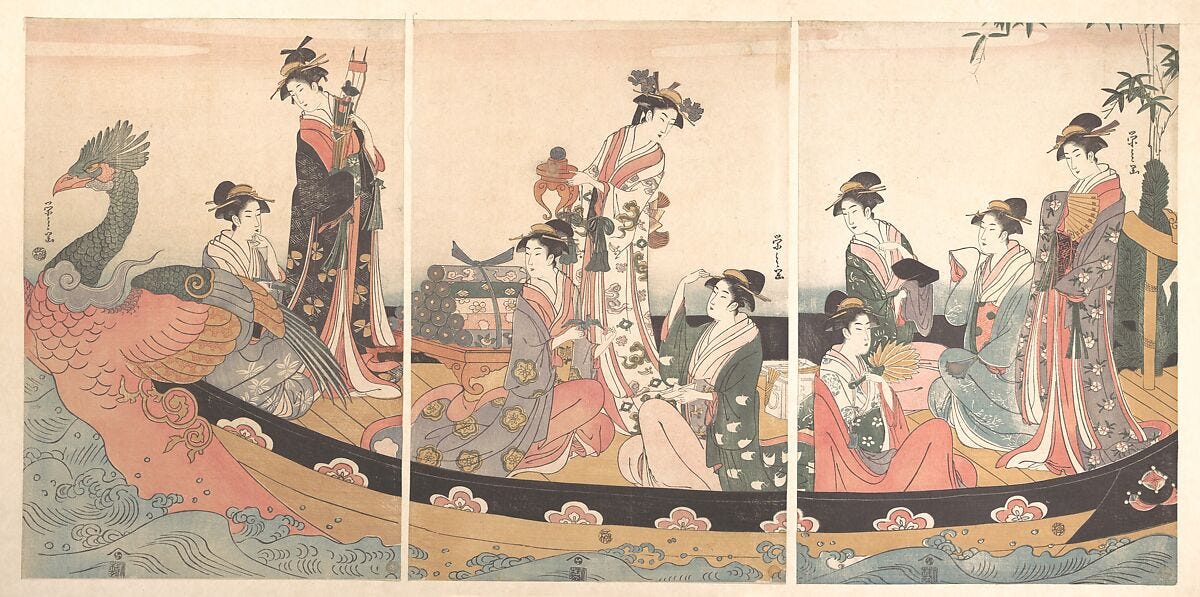
During Japan’s Edo period, they placed pictures of takarabune, or treasure ships, beneath their pillows. These ships carried the Seven Gods of Good Fortune and their treasures. Sleeping above such an image was thought to encourage a particularly lucky dream.
The custom appears in a Japanese woodblock print by Utagawa Yoshitora, now held by Lisbon’s Museu do Oriente.
Starting the year with a fortunate dream was important enough to prepare for before going to sleep.
Japan was hardly alone in giving the first moments of a new year unusual significance.
In Scotland, the first person to cross your threshold after midnight could traditionally influence your household’s fortune for the entire year.
The custom, known as first-footing, was an important part of Hogmanay, Scotland’s New Year celebrations.
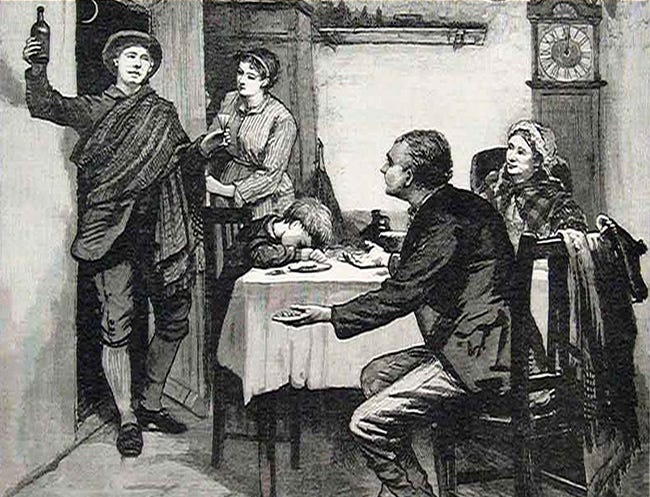
Ideally, your first visitor would be a tall, dark-haired man carrying gifts. A lump of coal promised warmth, shortbread or another food represented plenty, and whisky offered good cheer.
A fair-haired visitor, on the other hand, was sometimes considered unlucky.
One popular explanation connects this preference to the Vikings. A fair-haired stranger approaching a Scottish home might once have been a raider rather than a friendly neighbour. It’s an appealing explanation, although the historical connection remains uncertain.
The rules varied, too. As the National Coal Mining Museum explains, first-footing was also practised in northern England, and communities didn’t always agree about who made a lucky visitor.
But first experiences don’t have to involve a new year.
In Korea, a child celebrating their first birthday may be asked to pick what they will become, before they’re old enough to understand the question.
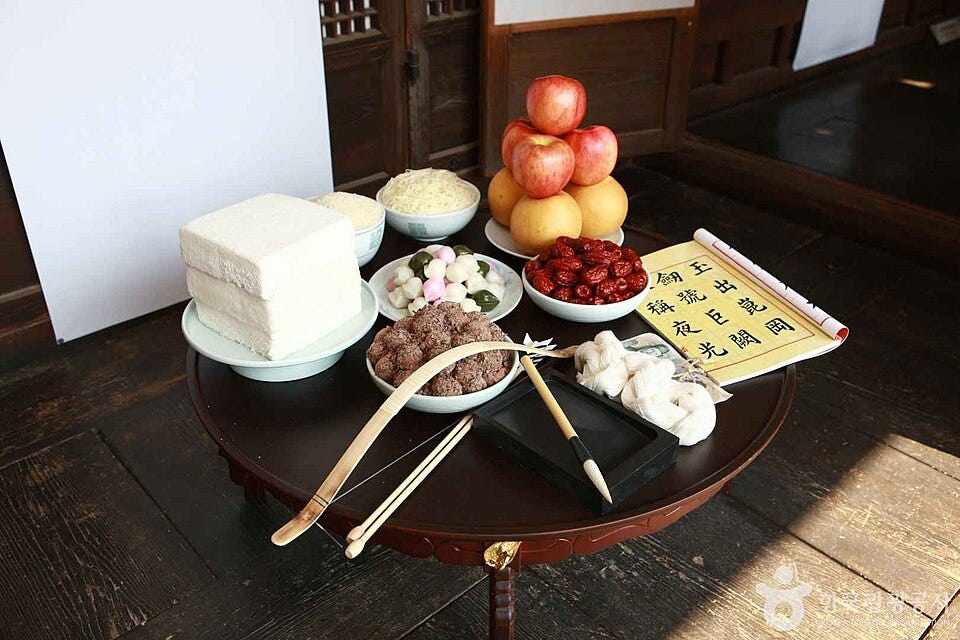
During a ceremony called doljabi, various objects are arranged before the child. The first object they choose is interpreted as an indication of their future.
Traditionally, a writing brush or book suggested scholarship. Money or grain indicated prosperity. A length of thread promised a long life.
The ceremony became widespread during Korea’s Joseon period, which began in 1392. Historically, the objects reflected expectations about gender and social roles. A bow and arrow, for example, could be offered to boys, suggesting a military career, as illustrated by the National Museum of Korea.
Today, birthday tables might include stethoscopes, microphones, golf balls or baseball gloves.
Even a baby, it seems, needs to consider the available career options.
Behind the playful predictions lies something more significant. In earlier centuries, when infant mortality was high, surviving to a first birthday was itself an achievement. The celebration marked a child’s survival as much as the possibilities of their future.
Other cultures have attached importance to a baby’s first experiences without asking them to predict anything.
Among the Diné, or Navajo people, a baby’s first laugh is traditionally an occasion for celebration.
The first laugh is understood as an important moment in the child’s relationship with family and community. The person credited with the baby’s first laugh traditionally hosts the celebration, bringing relatives together for an occasion in which the child gives gifts.
With an adult’s assistance, the baby distributes small pieces of salt to guests. Food is shared, reinforcing the importance of generosity.
In a collection of traditional Diné stories published by the Navajo Nation, the ceremony is connected to stories of Salt Woman and Changing Woman, who welcomed visitors with food and gifts.
Sometimes a first experience needs no elaborate ceremony at all.
In Jewish tradition, a blessing called Shehecheyanu expresses gratitude for reaching a special occasion. It is recited at certain festivals, on joyful occasions and, in some circumstances, when experiencing something for the first time.
One particularly lovely example concerns fruit.
When eating a genuinely seasonal fruit for the first time that season, a person may recite the blessing, thanking God for sustaining them and allowing them to reach that moment.
It might be a fresh fig, a pomegranate or a cherry. What matters is the fruit’s return after an absence, whether or not it has ever been eaten before.
As Chabad explains, the blessing recognises the occasion without predicting what might follow.
Which brings us back to Japan’s eggplant, and to a different kind of beginning. A dream sign asks the future to reveal itself. A blessing over the first cherries of summer asks nothing of the future at all. It simply notices that something ordinary has come around again, and decides that is worth a moment of thanks.